Wednesday, May 15, 2013

Keeping Educators up-to-date on the Most Pressing Issues of Our Time


The time lag between the advancing frontier of research in various disciplines and their incorporation into school curricula has always been problematic. When the research is multi-disciplinary, this also adds to the problem when schools are tied to organising learning into separate subjects that make problem-based investigation of ‘big issues’ hard to pursue. The Global Educational Reform Movement’s (GERM) widespread emphasis on accountability by use of standardised testing and league tables has raised further barriers to making school curricula relevant to the complex issues of our time.  Staying up-to-date with complex and accelerating change becomes more complicated when such knowledge becomes politically contentious as in the case of the impact of human activity on ecological systems. Current debates about carbon emissions and the use of fossil fuels, the instability of global financial systems and the increasing mal-distribution of wealth fall into this category.

Every conceivable perspective on these issues is now available on the internet to learners whether they are researching independently or are guided by their teachers. This example is one of countless numbers that provide quick access to ig ideas for teachers and students:

http://www.therules.org/en   - Global Wealth Inequality – what you never knew you never knew - a remarkable graphic representation of the increasing concentration of wealth globally and the huge outflow from poor to rich nations of wealth as a result of ‘the rules’ of trade, aid and the servicing of debt.

Specialist teachers and academics seeking to keep up-to-date have an almost impossible task, particularly in accessing cross-disciplinary research and publications outside their own specific disciplines.  Even getting to grips with emerging new concepts is a problem.  Let’s take just three terms that are central to the debate about maintaining a sustainable future for humanity and the planet: the ‘circular economy’ (the alternative to exponential economic growth) and the notion of the ‘Anthropocene’ (the unprecedented phenomenon of humans as the main geological force acting on the planet). Here is a description of a recent publication from a highly reputable international inter-disciplinary research centre that has identified nine ‘planetary boundaries’ that define the limits of the earth’s safe carrying capacity of human activity, three of which are already exceeded - http://www.stockholmresilience.org/21/research/research-news/12-5-2012-avoiding-bankrupting-nature.html:

Circular economy - key to well-being in the Anthropocene

The World Bank warned of an imminent global warming of 4°C. As Stockholm Resilience Centre research has previously shown, accelerated climate change due to raising temperature levels is just one of the planetary boundaries we risk transgressing. Altogether, the human pressure on the planet is at a level where it poses a major risk for the future prosperity of society. Johan Rockström and Anders Wijkman argue that this dilemma can only be addressed through a transformation of the entire economic system, including the financial markets which  should be obliged to disclose their risk exposure in terms of high-carbon investments. Bankrupting Nature - Denying our Planetary Boundaries  is an official Report to the Club of Rome, and was launched in Brussels at the European Parliament in December 2012. It argues that "Green growth" is not enough "The challenges of sustainability cannot be met by simply tinkering with the current economic system... We need a 'circular economy' that decouples wealth and welfare from resource consumption, and assigns a value to natural capital, so the depreciation of the earth's resources and the loss of biodiversity are taken into account in national as well as company budgets... We need new business models such as moving from products to services or towards a circular economy based on re-use, reconditioning and recycling — all with the aim of facilitating sustainable development".

The new book argues that a radically changed economic system that links economics with ecology is the only way to generate economic development in the future. A key element of such a new economy is to design industrial systems that recycle and reuse materials wherever possible and phase-out fossil fuels. This would be promoted through adopting binding targets for resource efficiency, increasing the taxes on the use of virgin materials and lowering taxes on labour, and a research policy that emphasises sustainable innovation and design.

So, what can educational leaders and teachers do to keep up-to-date and try to help their students do the same? Clearly the internet is their first port of call for teachers with little time to read widely. For example the link to the planetary boundaries research can be immediately accessed at https://www.oxfam.org/sites/www.oxfam.org/files/dp-a-safe-and-just-space-for-humanity-130212-en_0.pdf  

This 17-minute illustrated presentation by Kate Raworth brings together the planetary boundaries research with what she terms ‘social boundaries’ to create a ‘doughnut economy’ that provides a ‘safe space for humanity’.  Spending a short amount of time watching the presentation allows one to get to the heart of the issue in a fraction of the time needed for tackling a book such as that above.  A catalogue of time-efficient links to big ideas will be presented at the next ENIRDELM conference.

David Oldroyd

Monday, March 4, 2013

Detecting media and cherry-picking: A key educational aim?


Humans have always nurtured their own beliefs and opinions by selecting sources that reinforce their inclinations and biases. From the books and newspapers we read, to the blogs and TV channels we access, this defence of one’s view of the world  might be termed ‘media-picking’, the equivalent, on a larger scale, of one-sided ‘cherry-picking’ of evidence, a technique of ‘bad science’ used to support a particular hypothesis or to defend a biased point of view.

Many of us were educated to believe that ‘objective’ evidence was preferable to ‘subjective’ opinion as a way of making meaning and judgments in the search for truth.  Certainly, as a teacher I was encouraged to commit myself to reason, logic and fairness in the way I exposed my pupils to ideas. Controversial issues involving opposing and contradictory values were meant to be acknowledged and a ‘balance’ struck, by presenting all sides of the argument. This would encourage learners to examine critically their own positions and whether these could be justified by using evidence about cause and consequence.

In the physical sciences objectivity seemed easier to achieve than in the humanities where values came more obviously into play. How, for example, was one to deal with religions which all claimed their own ‘true beliefs’ not based on evidence, but  on ancient ‘holy books’ that required ‘faith’ in the words of God? Paul Krugman (NYT, 11.02.13) describes one political stance advocated in Bible Belt Texas Last year the Texas G.O.P. explicitly condemned efforts to teach “critical thinking skills,” because, it said, such efforts “have the purpose of challenging the student’s fixed beliefs and undermining parental authority.”

In contrast, the natural laws of physics, chemistry and biology based on scientific consensus, seemed relatively value-free. They seemed amenable to reason and logic, although a fundamental belief in the value of reason and logic was implied.  Many who adopt a naturalistic worldview based on science and reason hold a ‘fixed belief’ in reason, logic and universal natural laws. These beliefs have led to the advance of sciences such as medicine and the capacity to extend life-spans and define and protect human well-being and rights. A remarkable degree of specialisation and research has contributed to these social and technological advances although this has led to a level of complexity that makes it very hard to see the ‘big picture’. Humankind may be advancing towards large-scale disaster due to the widespread inability to see interrelated trends and the consequences of the exponential impact of human activity on the planet.

Biased media and politically-driven preference for ideological persuasion rather than evidence-based reason present major obstacles to reasoned examination of global issues. So does excessive specialisation in education and research and the fragmentation of school curricula. The rise of religious fundamentalism that is antipathetic to science and reason and the spread of ‘faith schools’ also encourages rather than diminishes the search for objectivity.

Of course, depending on what we believe, or upon our wishful thinking, we mostly media-pick and cherry-pick even when scientific consensus emerges on what is happening to our world. There is a full range of blogs, books, newspapers and other media outlets, academic institutions from which we can select to feed our pre-existing beliefs.

Many important issues such as economic growth, climate change or human rights have become politicised and balanced scientific reason has been trumped by ideology. Even the ‘objectivity’ of scientists is not always safeguarded. Naomi Oreskes, a historian of science and author of Merchants of Doubt: How a Handful of Scientists Obscure the Truth about Climate Change has recorded how a small number of politically motivated scientists waged successful delaying campaigns by spreading doubt on emerging evidence about the dangers of smoking, the use of herbicides and pesticides, CFCs, and global warming, and now its anthropogenic causes. Powerful corporations, groups and individuals with vested interests in the creation and concentration of wealth, drive economic growth and exercise disproportionate influence over mass media and political decision-makers.

Surely a key element in the teaching of critical thinking, given that this is not suppressed by political or religious ideology or by an overemphasis on test results, must be a focus on human bias that leads to media and cherry-picking. In facing the challenges of the Anthropocene Age, it seems vital to promote self-understanding and a commitment to evidence in an effort to diminish bias at all educational levels.
Michael Shermer (2011) The Believing Brain: How we construct beliefs and reinforce them as truths offers a detailed analysis of how we spend our entire lives media-picking and cherry-picking in defence of our own biases. Stuart Sutherland’s classic and iconoclastic study Irrationality (1992) also offers an overview of experimental psychological research into human behaviour that will challenge every reader to consider their own irrationality. For anyone wishing to stimulate critical thinking or to uphold their ‘fixed belief’ in the merits of rational scepticism, these two cherries offer highly nourishing pickings!

David Oldroyd

Saturday, February 9, 2013

is this the State of the World that school curricula should present?


At the CoRk Symposium in June 2012, Jaroslav Kalous outlined the range of problems that comprise a global crisis facing humanity and the planet that fails to get full recognition in the curricula of schools in most countries, let alone in the policies of most governments. Kalous went on to suggest that the global crisis will not be solved due to: unconcern related to the way humans are programmed by evolution; consumer-driven individualism that blinds people to the long term common good; and the political inability of nations to act with common purpose at the international level. Perhaps educators, aware of the gravity of these problems, prefer to protect their students from Kalous’ conclusion that, as a species, we are incapable of solving them?


The demographic-economic paradox


The higher GDP per capita, the fewer children are born in any industrialized country. Mortality rates are low, birth control is understood and easily accessible, and costs of child-rearing are often deemed very high because of education, clothing, feeding, and social amenities. In addition, lengthy periods of higher education often mean that women start to have children later in life.

In developing countries on the other hand, families desire children as labour and as caregivers for their parents in old age. Fertility rates are also higher due to the lack of access to contraceptives, generally lower levels of female education, and lower rates of female employment in industry.

Ageing


The world is ageing. With only a few exceptions, this process is taking place in every country and region across the globe. Population ageing arises from two demographic effects: increasing longevity and declining fertility. In 1900, the global average lifespan was just 31 years and even in the richest countries below 50 years. In 2005, the average global lifespan reached 66 years; over 80 years in some countries.

Consumption


An exponentially growing population needs to be matched by exponential growth of food production, extraction of raw materials, building homes, roads, etc. People are living longer, and urbanisation and population expands most in regions where it is most difficult to provide for basic material needs. Since World War II humanity has consumed more natural resources than during the whole of previous history.

Environment


Population growth also brings rapid growth of other problems. Each problem multiplied by seven billion involves enormous quantities. The problem is not population growth as such, but the growth of consumption. The environmental burden is caused not only by numbers but also by increasingly affluent lifestyles.  Some consequent environmental problems are: soil erosion, desertification, deforestation, air and water pollution, water contamination by toxic substances, depletion of stocks of oil and mineral resources, flushing the soil into rivers and water reservoirs, spread of human habitation onto arable land, falling ground water levels, shrinking wilderness area, global warming, radioactive waste, acid rain, and so on.

The Ecological Footprint is a measure of humanity’s demand on nature. It measures how much land and water area a human population requires to produce the resource it consumes and to absorb its wastes, using present technology. Humanity is now using nature's renewable services 50 % faster than the rate at which the Earth can renew them.

The Ecological Footprint of our species has more than doubled since 1966. In 2007, humanity used the equivalent of 1.5 planets to support its activities. Even with modest UN projections for population growth, consumption and climate change, by 2030 humanity will need the capacity of two Earths to absorb carbon dioxide waste and keep up with natural resource consumption.


The last global mass extinction which eliminated the dinosaurs and many other species was most likely caused by an asteroid hitting the earth. This happened sixty-five million years ago. Another similar catastrophic extinction of species is happening now. We are causing it and only a tiny fraction of humans are aware of it. Twenty-five thousand species are going extinct every year. If humans were not here, it is estimated that there would be one species going extinct every five years. We have pushed up the natural extinction rate a hundred thousand times.


In 2002 Rischard published a book “High Noon. Twenty Global Problems, Twenty Years to Solve Them”. Ten years later we are not very far down the road to solutions. They are divided into three groups:

Sharing our planet: Issues involving the global commons

•             Global warming
•             Biodiversity and ecosystem losses
•             Fisheries depletion
•             Deforestation
•             Water deficits
•             Maritime safety and pollution

Sharing our humanity: Issues requiring global commitment

•             Massive step-up in the fight against poverty
•             Peacekeeping, conflict prevention, combating terrorism
•             Education for all
•             Global infectious diseases
•             Digital divide
•             Natural disaster prevention and mitigation

Sharing our rule book: Issues needing a global regulatory approach

•             Reinventing taxation for the 21st century
•             Biotechnology rules
•             Global financial architecture
•             Illegal drugs
•             Trade, investment and competition rules
•             Intellectual property rights
•             E-commerce rules
•             International labour and migration rules

David Oldroyd

Tuesday, December 18, 2012

Sustainable adaptation and biomimicry for survival

Sustainable development can mean different things to different people.  Does it mean making sure that human civilisation can continue to expand indefinitely? Or that humans can indefinitely expand economic growth so that the nine billion forecast inhabitants of the planet by 2050 can be as rich as the top billion of today’s seven billion? Or that human population must mimic natural systems and become self-regulating in a steady-state relationship with the planet?
‘Sustainable’ clearly means indefinite maintenance of ‘development’, while development implies improvement to some better state.  This does not necessarily mean quantitative growth, but an increase in quality. Quality, of course, is itself a subjective term, but one simple definition is ‘fitness for purpose’. Evolution can be seen as ‘nature’s purpose’ within which the basic purpose of all species is survival and avoiding extinction. Basic survival is determined by natural selection which requires success in adapting to, or ‘being fit for’, survival in one’s environment. ‘Sustainable adaptation’ seems to be a better term than sustainable development. Development has too many associations with ‘growth’ that, at the current exponential rates, is rapidly exceeding the earth’s carrying capacity of both the products of human activity, and of human population.
Biological adaptation involves new combinations of genes that bring about innovation (mutagenesis) in the characteristics of the organism through the mechanism of mutation.  The equivalent process in human societies is innovation based on new ideas (or ‘memes’) that lead to adaptive change.  In biology only a small minority of mutations lead to successful sustainable adaptation and the majority of mutations (negative mutations) have maladaptive consequences in terms of fitness for survival. Other mutations are neutral and do not change the adaptive capacity of the organic system in relation to its external environment. Adaptation for survival has allowed the human species to flourish thanks to many successful innovations, but the exponential growth of human impact on the planet, to a large extent made possible by energy from fossil fuels, is now crossing planetary boundaries. The human innovations that have allowed the survival and rapid expansion of human population and its capacity to transform the planet and its resources are now themselves changing their status from the equivalent of positive to negative ‘mutations’. Put another way, beneficial ‘memes’ are now themselves transforming into negative maladaptive memes. This redefinition stems from unintended consequences of innovations that originally enhanced the material well-being of human societies, but now have resulted in ‘overshoot’ of planetary carrying capacity. The sources of the current socio-ecological predicament include: medical science; industrial chemically-based agriculture; the exploitation of coal, oil and natural gas; the replacement of natural ecosystems with managed ecosystems - all now driving exponential growth. They might now be considered as negative memes due to their unintended consequences that threaten the survival of many species, including our own.
Human creativity and innovation in the field of technology have fuelled economic growth, population expansion and impact on natural systems based on the assumption that exponential growth was unlimited.  The evolution of human societies cannot be infinite on a finite planet. In order to ensure survival, human innovations that develop human systems need to mimic the behaviour of natural systems that sustain themselves within the constraints of the nature and the planet’s carrying capacity. Biomimicry is an approach to design that mimics the natural forms, processes and ecosystems that have evolved over 3.8 billion years:
biomimicry is an innovation method that seeks sustainable solutions by emulating nature’s time-tested patterns and strategies, e.g., a solar cell inspired by a leaf. The goal is to create products, processes, and policies—new ways of living—that are well-adapted to life on earth over the long haul. [http://biomimicry.net/about/biomimicry/a-biomimicry-primer/]
If human innovations are the equivalent of biological mutations in the process of adaptation, then they need to be tested against their capacity for sustainable adaptation, not simply in producing short-term benefits. The assessment of the risk of unintended consequences of releasing innovations into human systems and their possible effects on natural systems needs to become a high priority. At present, market economics places no such constraints upon the innovation that is central to the ‘creative destruction’ that drives the capitalist system. There is a growing movement towards a fundamental rethink of economics for ecological sustainability, for example, the New Economics Foundation, Center for the Advancement of the Steady State Economy and the World Economics Association. ‘Circular’ (as opposed to growth) economics, in which renewable resource use and recycling mimic nature’s steady state, are central to the ‘new economics’. But these advocates currently have little influence on political life.  As for education, if the accelerating human predicament is to be seriously addressed, then a critical stance should be encouraged to woolly notions about sustainable development. Human systems should be designed based on self-regulating nature systems and biomimicry. Sustainable adaptation of humans to the constraints of nature and planetary boundaries should replace 'creative destruction' that assumes that the earth has an unlimited carrying capacity for the fruits of human creativitiy .

Friday, December 14, 2012

Teaching the ‘big picture’ of human connectedness to nature

Thinking about the earth as a system of systems is far removed from the everyday experience of most people, whether young or old. For the young, the level of abstraction of such a concept is likely to require an unusual extension of their normal cognitive grasp. However the imaginative capacity of children is prodigious and it is often said that conventional schooling crushes out of them this capacity as they are tracked through a fragmented curriculum as they progress into secondary school and are subjected to the rigours of testing and exams that check their grasp of ‘school knowledge’. Over half of the earth’s human population now lives in urban centres.  Growing up in an urban environment separates children from nature despite the presence of parks and gardens. It also makes them less aware of the movement of the earth around the sun and of diurnal and seasonal rhythms as they are most of the time surrounded by the human-constructed environment and an electronic cocoon that, at least in the affluent countries, powers the gadgets and games that distract from direct contact with nature. These distractions limit the opportunity to develop a sense that we inhabit an orbiting planet which sustains us. They also work against an understanding that we are embedded in and sustained by a complex web of life that covers the earth’s surface and is powered by the sun.
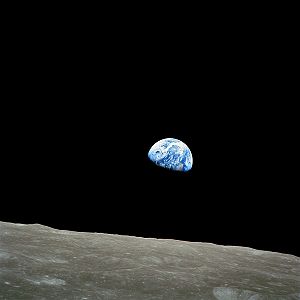
So how might people, young and old, be helped to grasp the reality of our connectedness with the natural world upon which our existence depends?  The iconic ‘Earthrise’ picture taken from the spacecraft orbiting the moon in 1968 is a useful starting point.  The blue and white planet itself seems like a space craft from that distance, a beautiful object covered by life sustaining water in the form of seas and clouds that gave rise to organic life of which we are an evolved and highly complex form. Water can only exist in its liquid form on planets that are an optimal distance from the star that they orbit. The remarkable combination of factors that have led to the evolution of life on earth, providing the stability for over 3.5 billion years to allow life to evolve are now well understood.  BBC TV series such as those by Brian Cox and David Attenborough allow us to share this understanding. Prof. Cox’s Wonders of the Solar System is indeed well-named and can be comprehended and discussed by secondary school pupils. Such programmes provoke a real sense of wonder as well as what can be called ‘global consciousness’ – the big picture, at the scale of the planet, of why life exists at all and how it now coats the planet in a single complex global ecosystem of which we have evolved as a totally dependent part. Our conscious minds and capacity for complex thought and language have emerged only in very recent evolutionary time but have given us a remarkable capacity to modify the physical earth. Developing global consciousness is an essential step towards grasping the enormity of human impact on the planet that is now threatening to become unsustainable.
Human impact is illustrated by the Suomi satellite picture of a cloud-free western edge of Europe glowing with electric street lighting generated mainly from the release of energy stored in fossil fuels. What if we visualise instead, a picture of the earth with human created energy shut down and instead imagine the glow that would come from the breathing of living organisms busy transforming the energy from the sun into the material that makes up what nature builds, aided by the process of photosynthesis and respiration?  This is an exercise in visualisation that is used in a teacher education workshop at the Centre for Ecological and Environmental Education at the Silesia Botanical Garden in Poland. The Centre is engaged in developing ‘deep education for a sustainable future’, pioneering a pedagogy that combines storytelling, ritual, scientific investigation and creative imagination to connect learners and their teachers to the ‘big picture’ of global consciousness referred to above. The 3-hour workshop centred on the theme of ‘breathing’ takes the participants through three stages:
Story-telling – the archetypal myths relating to breathing such as the creation myth in which life was created by the breath of a universal creator and how breathing provides the basic rhythm of life and illustrates the mystery of existence.
A scientific experiment – that investigates the process of respiration using simple and affordable modern equipment.
Connecting to the big picture:
1.       Visualising the global glow of breath with which nature covers the planet.
2.       Making mind maps together of the many terms derived from the fundamental idea of breathing that provide multiple threads to many aspects of human experience.
3.       Discussing what the situation would be if our only means of understanding breathing was by means of conducting scientific experiments.
This exercise in holistic, inter-connected thinking transcends ‘school knowledge’ and illustrates the power of collaborative and generative learning that draws on all aspects of the learners’ life experience. Breathing is something we all do and experience and is something that we have in common with the rest of the complex web of life. Perhaps this example from a non-formal education setting will stimulate others to share their approaches to holistic learning for global consciousness and our proper place in nature.

Sunday, December 2, 2012

Community and the Future

The Dali Lama, when asked what surprised him most about humanity, answered "Man.... Because he sacrifices his health in order to make money. Then he sacrifices money to recuperate his health. And then he is so anxious about the future that he does not enjoy the present; the result being that he does not live in the present or the future; he lives as if he is never going to die, and then dies having never really lived."

Margaret Wheatley is a community imagineer, author and fascinating specialist in engagement. She has worked in communities around the world, especially with aboriginal (First Nations) peoples, in helping them understand that "no one is coming to help them", but that have tremendous power "in and through community". She suspects that this applies to us all. 

Her newest book  - So Far from Home : Lost and Found in Our Brave New World  (Berrett-Koehler, San Francisco, 2012) - feels dark. When asked why, she quietly replies that "these are dark times". Her catalogue of shadows and curtains on our world including the sense that the problems we face are increasing and the solutions we try don't appear to work; we appear to have shrinking resources as we expand our presence on the planet, but no means of increasing our ability to supply food, water and energy equitably; individuals feel an increasing uncertainty about their identity and the meaning of their lives, yet they are better connected through technology with other voices than we have ever been; people report that they are "busy, busy, busy" and that they are overwhelmed and experience fear, anxiety and distress. All of this tends to focus our sense that we need leaders and leadership, but leadership and effective leaders seem to be in short supply. Its pretty bleak out there.

Yet there is something present that we tend to overlook and that is the power of community - real community, not a Facebook group or a Linkedin network. People caring about each other locally. Wheatley points out that "nothing living lives alone" and that "we are bundles of potential that manifests only in relationship". So as to create health and move to solutions, we need to make connections and build community. Given that, in her view, "no one else is coming", its critical to realize that, in the words of the Native American Hopi Elders, "we are the ones we have been waiting for". 

Rather than focus on the darkness within and around us, there is a need to focus on possibilities. These means that we need not confine ourselves to the preconceived possibilities for our future - we can "break out" and be "disruptive". Rather than ask "what's wrong and how do we fix it" we should ask "what's possible and who cares?". 

"We are [as individuals and as communities] bundles of potential that manifests only in relationships" - so we need to build community and explore possibilities. 

Wheatley draws attention to the prophecies of the Hopi Nation - an Arizona American First Nation. They suggest that the fourth world (our world) is about to end the fifth world is about to begin. This fifth world is one in which we stop the search for economic growth and focus instead on re-finding the balance between man and nature, between self and community and within self. This thinking is captured in this statement from the Hopi elders:

This could be a good time!
There is a river flowing now very fast.
It is so great and swift that there are those who will be afraid.
They will try to hold on to the shore.
They will feel they are being torn apart, and they will suffer greatly.
Know the river has its destination.
The elders say we must let go of the shore, push off into the middle of
the river, keep our eyes open, and our heads above the water.
See who is in there with you and celebrate.
At this time in history, we are to take nothing personally.
Least of all, ourselves.
For the moment that we do, our spiritual growth and journey comes to a halt.
The time of the lone wolf is over. Gather yourselves!
Banish the word struggle from your attitude and your vocabulary.
All that we do now must be done in a sacred manner and in celebration.
We are the ones we’ve been waiting for.
-The Elders, Oraibi, Arizona Hopi Nation

The question for us is simple: are we willing to push off into the middle of the river?
 
Stephen Murgatroyd

Saturday, October 6, 2012

Learning Science - Key to A Sustainble Future


 Students and teachers are challenged to make sense of all the claims and counterclaims about our future, especially with respect to issues of sustainability. For example, virtual science based on computer modeling is the basis for most predictions and scenarios about climate change, extreme weather events and biodiversity. But we do not teach modeling as a scientific practice in schools, we teach science in terms of discrete disciplines (physics, biology, chemistry) rather than as the practice of model building. When students are confronted with skeptical scientists who base their skepticism on data and observation rather than models, they are unsure how to evaluate evidence.

A concrete example may assist in making clear the point. All eighteen computer models of ice formations in the Antarctic suggest that ice sheets should be experiencing continued decline.  Each shows a decrease in each month, with the greatest multi-model mean percentage monthly decline of 13.6% in February and the greatest absolute loss of ice in September. The models have very large differences in the rate and extent of loss over 1860 – 2005. However, data collected through satellite observations make clear that sea ice has been expanding , with the September 2012 extent of 19,1702 million square kilometers being amongst the largest extent ever recorded (see here for data). The models are clearly wrong, but it is the model data and their gloomy predictions that gets the press not the optimistic data from real observation.

Similar issues exist between models and data for such things as polar bear extent (with the exception of two specific communities, the polar bear population is actually growing and is very healthy), extreme weather events (no established connection to climate change according to the IPCC’s analysis and other studies) and other issues with environment and sustainability.

What then do we teach students? Students are generally being taught that the Antarctic ice is melting, that polar bears are in decline and that extreme weather events are linked to climate change. They are not being asked to look critically at the difference between different kinds of scientific inquiry and evidence – e.g. between virtual science, experimental science and natural observation.

They are also not generally taught the difference between evidence based policy, such as the war on DDT fought by Rachel Carlson with selective and biased evidence use and the evidence based policy approach, which uses a systematic and inclusive approach to evidence so as to reach a comprehensive understanding of the challenge. Cold hard looks at evidence for Carlson’s claims (see here and also here) suggest that she used a very flawed approach to science. The same can also be said of Lord Sterns’s review of the policy implications of climate change (see here).

We have similar challenges in biology and medicine. Claims are made about homeopathy, for example, which have no scientific basis whatsoever, yet various health systems promote and enable its practice (see here) and some schools and colleges actually teach homeopathy as “an alternative medicine” (sic). Claims are made about new treatments and discoveries which, when looked at critically and scientifically are problematic, as reviews by the Cochrane Collaboration make clear (see here for useful columns by Ben Goldacre describing some of these challenges).

How do we encourage students to look at such claims and to look at skeptical responses to them? How do we teach the basis of scientific inquiry and skeptical analysis in a systematic way so that the educational process is not simply “buying in” to a politically correct narrative, but is actually developing scientific and critical skills?

This is a real challenge for those who are committed to sustainability and development. Unless we fall into the trap of buying into the narrative that the future is one in which we are doomed in ways which are “inevitable” according to science, we need upcoming generations to be able to reason scientifically, understand evidence, be able to be critical of science (especially pseudo-science) and be able to practice the scientific methods. We also need them to see science as informing public policy not determining it and to recognize the difference between campaigning and scientific inquiry – lines which, after the work of Feyerabend (e.g. Against Method, 1975) , have become blurred.

Students need the skills to recognize “bad” science, polemics and campaigning science and the skills to be able to undertake critical scientific inquiry. I am not sure that our current teaching of science is achieving these intentions. A sustainable planet needs schools, colleges and universities to produce scientists that understand not just their discipline, but the philosophy and history of science. Otherwise, progress will be inhibited by bias and polemic.

Stephen Murgatroyd